
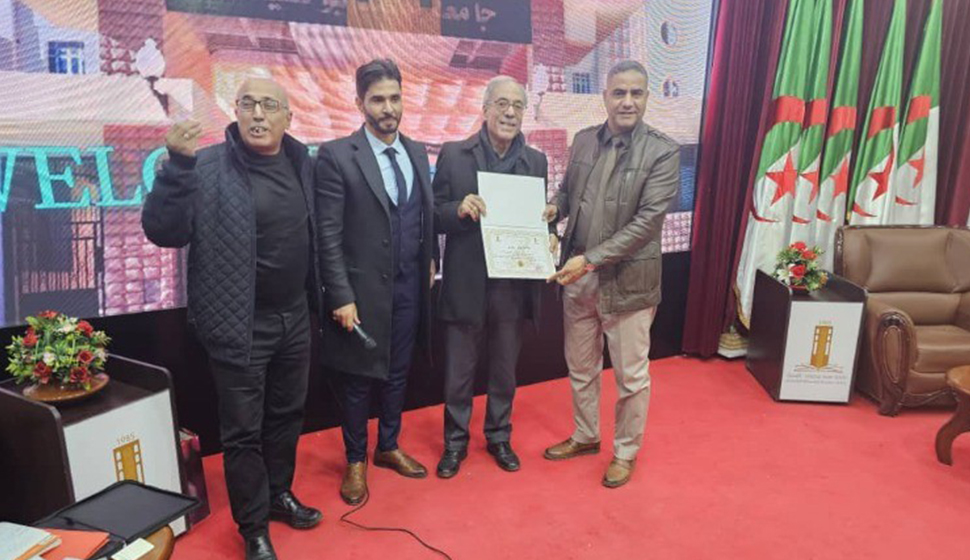
The Faculty of Arts and Languages at the University of M’sila hosted a cultural and intellectual symposium yesterday, Sunday, featuring the writer, novelist, translator, and critic Mohamed Sari, as part of the celebrations for World Arabic Language Day. The event was organized to foster academic dialogue on issues of translation, language, and creativity within Algerian universities.
The symposium opened with a speech by Dr. Khaddar Mounir, Assistant Head of the Department of Postgraduate Translation and Scientific Research, who welcomed the attendees and praised the guest’s scholarly and literary contributions. A video highlighting Sari’s creative and critical career was then shown.
In his welcoming remarks, the Dean of the Faculty, Professor Henni Lakhdar, emphasized the importance of such initiatives in stimulating academic and intellectual activity at the university, highlighting Mohamed Sari’s prominent literary standing in the national cultural landscape.
The participants addressed three pivotal issues at the heart of linguistic and translation studies: the status of the Arabic language in the realm of translation and creative writing, and the challenges it faces amidst global cultural shifts; the role of literary translation as a bridge for communication between peoples, and the necessity of developing the training of translation students; and the image of the Arabic language in the eyes of others and the influence of stereotypes on the selection of translated works.
The guest speaker, drawing on his experience as a novelist, translator, and researcher, offered critical insights into the position of translation in Algerian literature and ways to enhance the presence of Arabic in the global creative sphere.
At the conclusion of the meeting, the Dean of the Faculty and Professor Khaddar Munir honored the writer Mohamed Sari with a certificate of appreciation and symbolic gifts in recognition of his contributions and his enrichment of intellectual discourse within the university.