
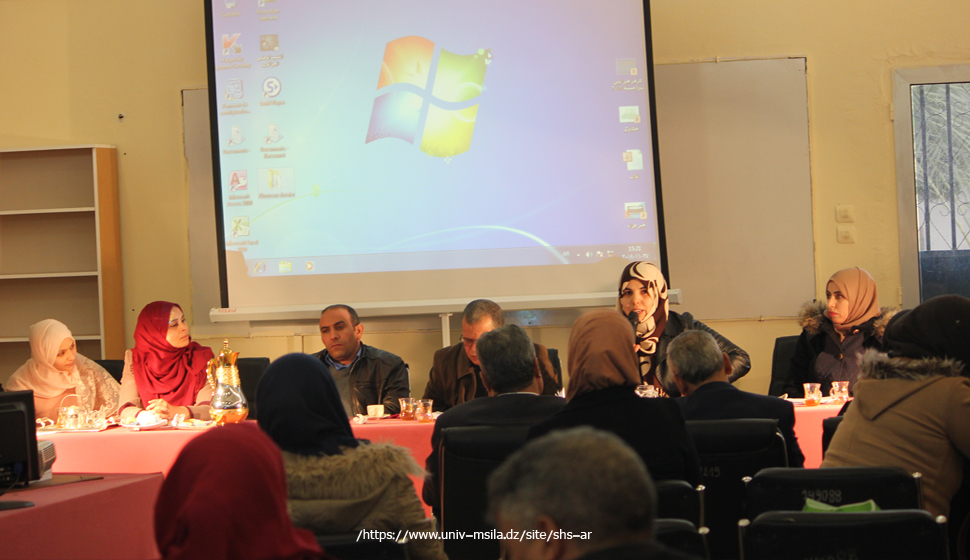
National Seminar: Modern Technologies and Their Impact on Achieving Quality Education
Organized by the Laboratory of Anthropological Studies and Social Problems
On November 27, 2018, the Laboratory of Anthropological Studies and Social Problems at Mohamed Boudiaf University in M’Sila organized the Fourth National Seminar on: “Modern Technologies and Their Impact on Achieving Quality Education.” The event took place at the Laboratory’s headquarters, within the University’s Laboratories Complex.
The opening ceremony of the National Seminar was held in the presence of Professor Boudra Ibrahim, Vice-Rector for Post-Graduate Studies (Third Cycle), University Qualification, Scientific Research, and Post-Graduate Training, on behalf of the University Rector.
The event commenced with a speech by the Seminar President, Dr. Zallaki Wahiba, who provided a thorough explanation of the seminar’s core problem/issue. This was followed by a speech from the Laboratory Director, Professor Mokhtar Rahab, who welcomed the attendees, especially the visiting professors and experts from national universities. He emphasized the importance and reasons for including such topics in the Laboratory’s activities.
Next, the Vice-Rector delivered his speech, welcoming the guests and expressing gratitude to the Laboratory staff for their efforts and contributions to scientific vitality in service of the university. He then officially announced the opening of the seminar proceedings.
The seminar witnessed the participation of many professors and researchers from national universities, including: the University of Algiers 2, University of Constantine 3, University of Chlef, University of Bouira, University of Biskra, Ibn Khaldoun University of Tiaret, University of Djelfa, University of Bordj Bou Arreridj, and the National Higher Institute for Youth and Sports Cadres in Constantine. In addition, there were contributions from professors from the National Agency for the Promotion and Development of Technology Parks, as well as professors from the Sociology Department and other departments within the Faculty. The seminar also saw the participation of numerous researchers and LMD Third Cycle PhD students.
After a full day of continuous sessions and purposeful discussions, the proceedings concluded with the reading of the recommendations of the Fourth National Seminar.