The Fourth Ordinary Meeting of the Subcommittee for Quality Assurance
- Date 19 June، 2026
The Fourth Ordinary Meeting of the Institute’s Subcommittee for Quality Assurance
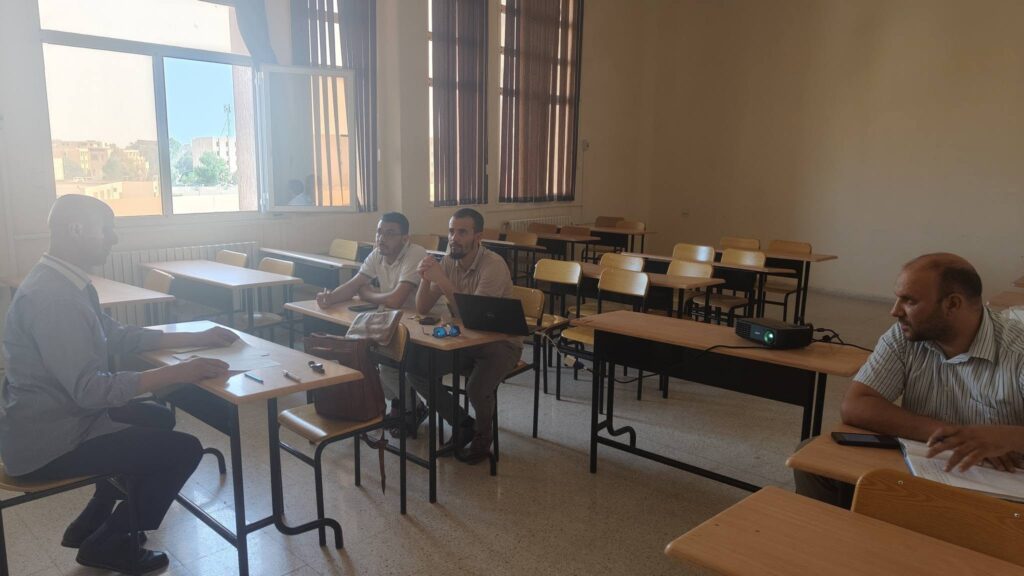
On Wednesday, 17 June 2026, at 1:30 p.m., the fourth ordinary meeting of the Institute’s Subcommittee for Quality Assurance was held at the office of the Deputy Director in charge of Studies and Student Affairs. The meeting was chaired by Professor Ramadan Boukharas and organized as part of the activities of the University’s Strategic Plan for implementing the requirements of the ISO 9001:2015 Quality Management System (QMS).
These activities included the organization of three training courses on the Quality Management System, each comprising two full days of theoretical presentations and practical workshops for the heads of the subcommittees for quality assurance and internal auditors. In accordance with the recommendations of the University’s Central Quality Assurance Committee, which emphasized the importance of consolidating the outcomes of these academic activities and ensuring the effective and sustainable implementation of the requirements of the international standard, this meeting aimed to promote the continuous improvement of institutional performance and quality.
The meeting provided an opportunity for the members of the Institute’s Subcommittee for Quality Assurance to share experiences, transfer acquired knowledge, and develop a comprehensive understanding of the Quality Management System, thereby strengthening their knowledge and practical skills. The session featured a high-level academic programme focusing on the following points:
1. Review of the First Training Course: Introduction to the Quality Management System
A concise review was presented of the first training course, which addressed the fundamentals of the Quality Management System, the High-Level Structure (HLS) of the international standard and its main clauses, as well as the support and operational requirements of the ISO 9001:2015 standard. These included legal and regulatory requirements, the fulfilment of customer requirements, and the management of risks and opportunities in relation to the institutional context.
2. Review of the Second Training Course: Risk Management, Objective Setting and Performance Measurement
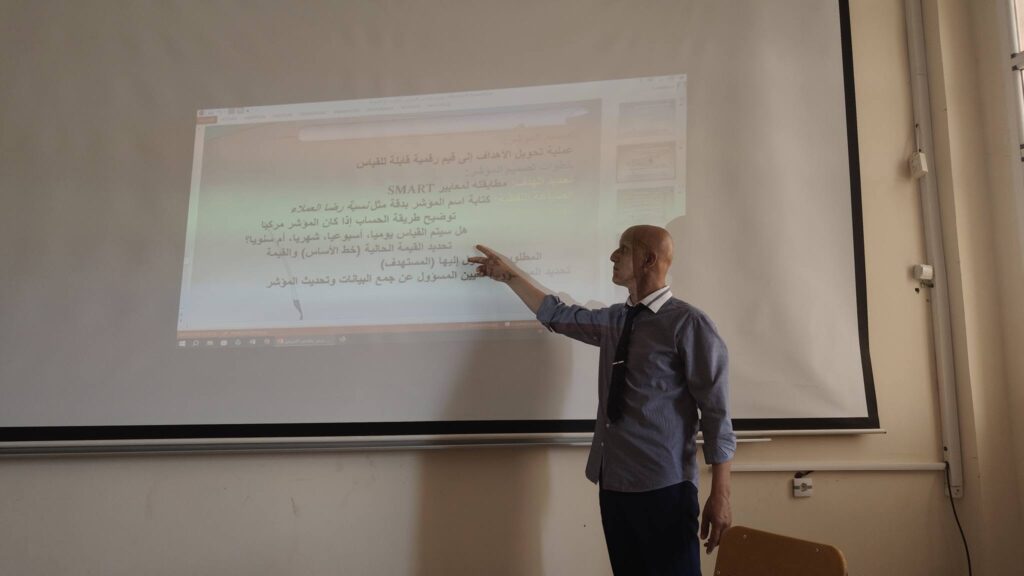
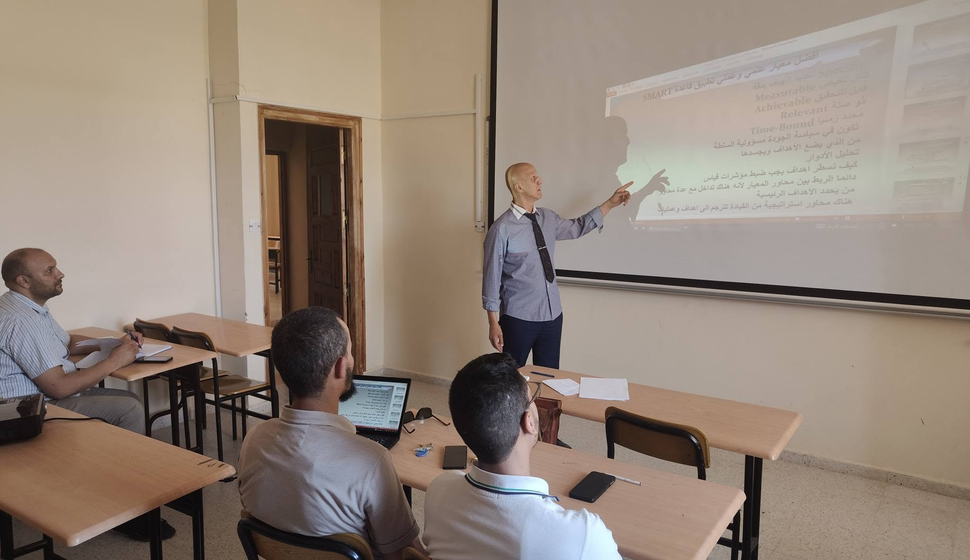
The main outcomes of the second training course were presented, focusing on risk management using PESTEL analysis, the formulation of objectives according to the SMART framework, performance measurement, and the identification of performance indicators in accordance with ISO 9001:2015.
3. Review of the Third Training Course: Documentation of the Quality Management System in Higher Education Institutions
A summary of the third training course was presented, highlighting the documentation of the Quality Management System in higher education institutions in accordance with ISO 9001:2015. The main topics included documented information, documentation requirements, the control of documented information, procedural models, and procedure descriptions.
4. Presentation of the Strategic Plan for Implementing the Quality Management System
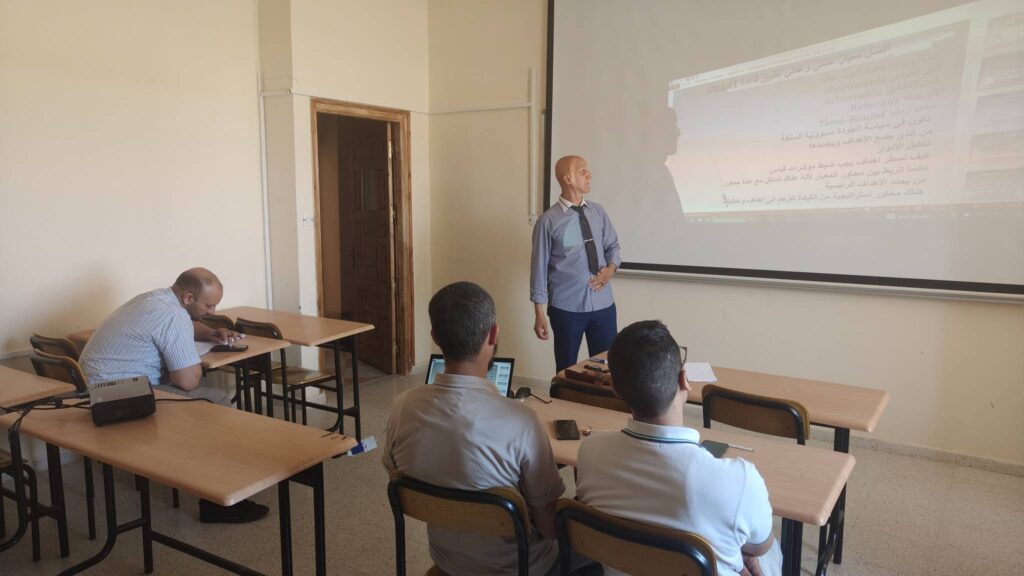
Professor Ramadan Boukharas presented a summary of the strategic plan for implementing the Quality Management System in accordance with the ISO 9001 standard, together with an explanation of the mechanisms required to operationalize and implement the plan effectively.
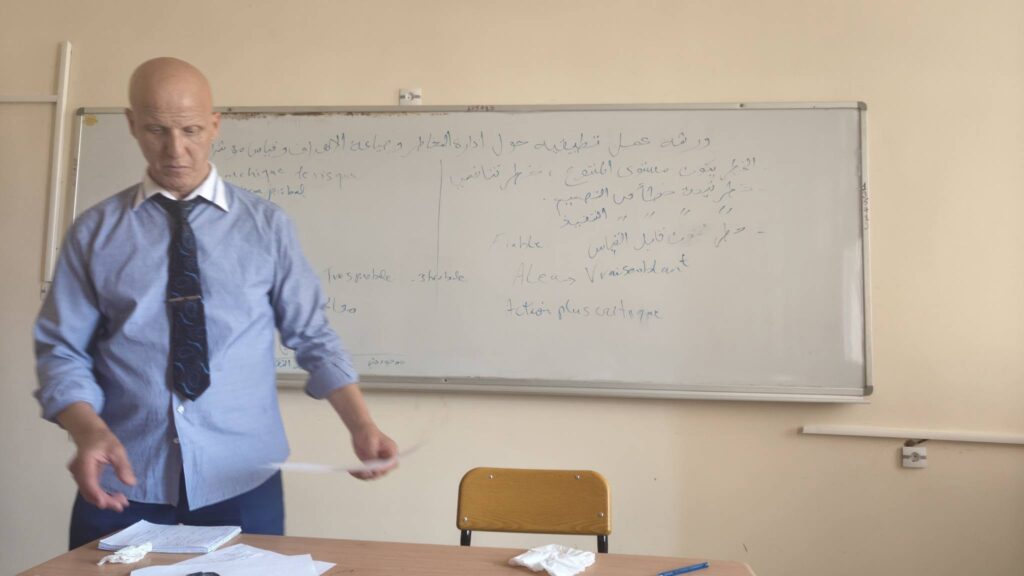
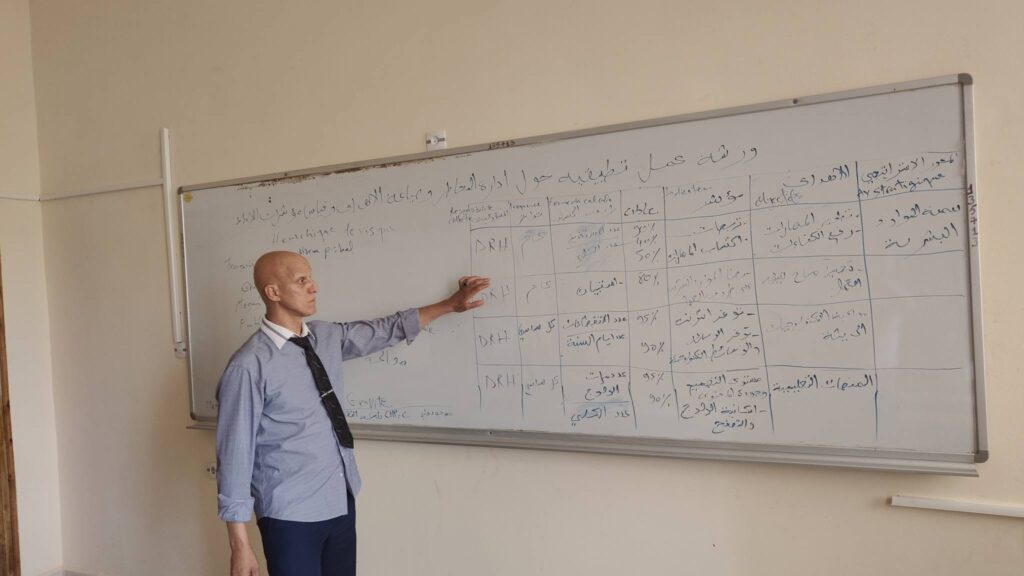
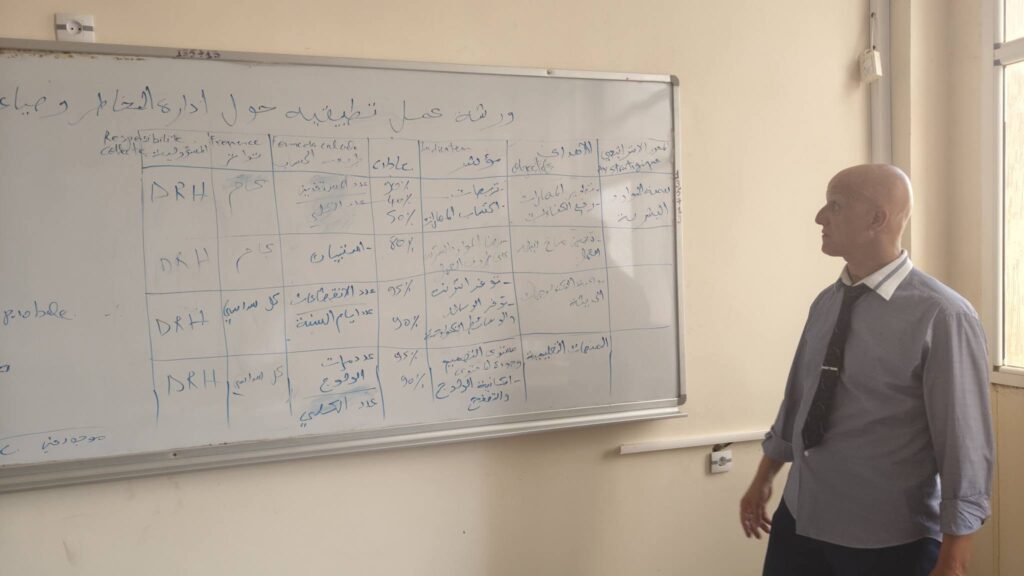
5. Practical Workshop on Risk Management, Objective Setting and Performance Indicator Measurement
A practical workshop was conducted on risk management, the formulation of objectives, and the measurement of performance indicators. As a practical case study, the strategic pillar relating to human resource development was selected.
The subsequent discussion provided an opportunity for participants to exchange views and examine the risk-based thinking approach, the formulation of objectives, and the development of performance indicators using a recognized scientific and practical framework, namely the SMART methodology. The discussion also addressed the process of establishing objectives and aligning the various clauses of the standard, beginning with the identification of strategic priorities by institutional leadership and translating them into operational objectives, processes, and corrective actions. These mechanisms are intended to support continuous improvement, institutional development, outstanding performance, and competitiveness.
The practical workshop also enabled the members of the Subcommittee for Quality Assurance to apply the procedures and methodology for designing performance indicators. The practical exercise covered the following steps:
Objective setting: Ensuring that objectives comply with the SMART criteria.
Indicator definition: Formulating a precise and unambiguous name for each performance indicator.
Mathematical formula: Establishing the calculation method used to measure each indicator.
Measurement frequency: Determining whether the indicator will be measured daily, weekly, monthly, or annually.
Baseline and target values: Identifying the current performance level (baseline) and the expected performance value (target).
Assignment of responsibilities: Designating the person responsible for collecting data and updating the indicator.
The academic session witnessed a high level of positive engagement and constructive interaction among the members of the Subcommittee. Participants actively contributed to discussions concerning the theoretical and reference frameworks presented in the three training courses, the strategic plan for the Quality Management System, and the practical workshop. Their questions, observations, and contributions reflected a strong commitment to understanding and implementing the principles and requirements of quality management within the Institute.
In conclusion, sincere thanks and appreciation are extended to all members of the Subcommittee for Quality Assurance who attended and actively contributed to the success of this meeting. Special appreciation is also extended to the Director of the Institute for the assistance and facilities provided to support the Committee’s work and enable it to carry out its responsibilities effectively.
Gratitude is further expressed to the Deputy Director in charge of Studies and Student Affairs for making his office available and providing the necessary support to ensure the successful implementation of these academic activities undertaken by the Institute’s Subcommittee for Quality Assurance.